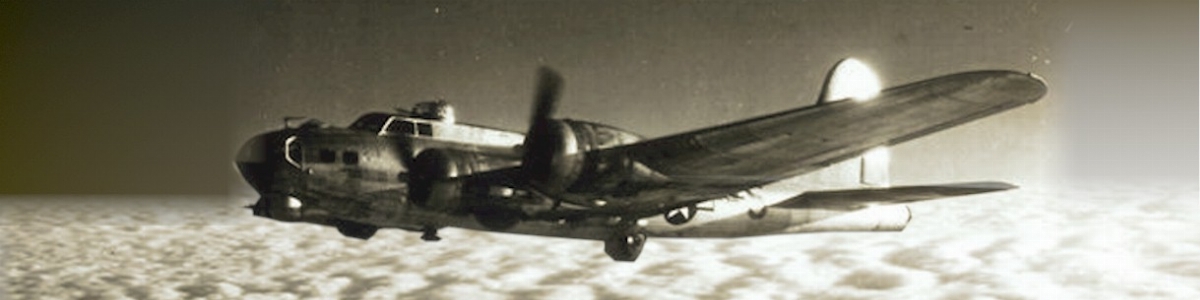
The B-24 "The Liberator"

44-40298 “The Shack”
The first 50 missions flown from Debach were in the B-24 heavy bomber,
designed by the Consolidated Aircraft Company of San Diego, California.
The “Liberator” had the distinction of being the most produced allied
aircraft in WWII, with over 18,000 being built. At one point they
were rolling off the production lines at 1 aircraft per hour, thanks
largely to the Willow Run Facility, the Ford Motor Company’s newest
and largest production line in Detroit, Michigan, although they were
also built in Oklahoma, Texas and of course in San Diego.
The 493rd BG were issued with brand new aircraft, collected from the
factories, to be flown over to England. On arrival, the first job
was to remove most of the heavy armour plating, designed to protect
the crews. This plating reduced the bomb load that could be carried
and at the time was considered to be unnecessary – this view was soon
changed and some of the plating was later refitted in the critical
areas. The aircraft were named and nose art applied, at the personal
expense of the crews (more often the Pilots), individual crew members
regularly “named” their gun positions after loved ones. Then, before
a single mission was flown, some of their lovingly prepared aircraft
were taken away from them and replaced by “battle experienced” aircraft
previously used by other groups, so the process began again.
The first mission flown in the B-24s was on the 6th June 1944 – “D-Day”
assisting the ground troops.
In Late July the ball turrets were removed from most of the B-24s
in an effort to increase the speed of the aircraft so the crew, who
had trained together, lived together and flew their first missions
together, had to lose one of their number. In some cases it was the
ball turret gunner who left. In other crews the decision was made
amongst all of the gunners on board, often by the roll of the dice,
or the cut of the cards. Whilst a lot of these “aircraft less” gunners
went off to join other groups, some stayed at Debach, either as “spare
gunners”, or went to work in the armories preparing the guns for their
colleagues, many returning to flying duties with the arrival of the
B-17s.
The last mission the 493rd BG flew in B-24s was on August 28th 1944,
to Kiel in Germany.
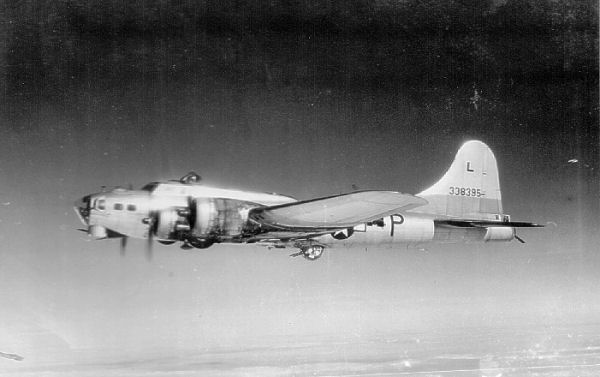
The B-17 "The Flying Fortress"

43-38395 “Taylor Made”
During late August and early September the air crews and their ground
support teams went through a transition period training to fly and
maintain the B-17G “Flying Fortress”. Often the initial transition
training for the pilots consisted of little more than a few circuits
of the airfield with some “touch and go’s” thrown in for good measure,
with an instructor, and then they were left to get on with it, learning
the new aircraft as they went. Several accidents were credited to
forgetting to flick a switch – with the excuse of “we didn’t know
it was there” being the accepted answer. It was a credit to the crews
that they were ready to return to flying combat missions on the 8th
September 1944, attacking an Ordnance factory in Mainz Germany.
The B-17G was the newest, and most produced, variant of the B-17 bomber
designed by the Boeing Company. Over 4,000 aircraft rolled off of
the Boeing Production lines. Two other companies, Douglas and Vega,
also built these aircraft, between them turning out approximately
half of the final production number. Although only just over 8,500
B-17s, of all variants, were built, they carried almost half of the
total bomb tonnage, by all U.S. aircraft, dropped on Germany.
Designed for a crew of 10 the major change, at least for one member
of the crew, was that the navigator now had a seat! and moved from
the cockpit down into the nose of the aircraft with the bombardier.
With the introduction of new electronic navigation aids the ball turrets
on some aircraft were removed and replaced by radar domes, these aircraft
were the pathfinders. The ball turret gunner being replaced by the
“Mickey” (or radar) operator.
Amongst the many bombing missions carried out by the 493rd BG, the
B-17G was also used to drop food for the Dutch in “Operation Chowhound”
on 6 occasions, and 4 times the group flew to Horsching in Austria
to bring released POWs back to France, each time carrying 30 passengers.
Other Aircraft
P47 Thunderbolt
It was very unusual to have a P47 Fighter plane at a bomber base. Col Robert Landry, who had previously been in command of the 56th Fighter Group,and later to become Executive Officer of the 93rd Combat Wing, joined the 493rd BG as Commanding Officer in February 1945. He brought with him, to Debach, a P-47 Thunderbolt for his "personal" use. This aircraft was usually parked on the hardstanding near the control tower.
There are numerous sites on the internet that give all the technical
specifications of these aircraft and putting “B-24” or “B-17” into
your favourite search engine will give far more information than we
could hope to post here – but please remember to come back to us and
see what else we have to offer.